In my childhood we welcomed in New Year by standing beside the River Mersey at midnight to hear the ships out on the Irish Sea sound their foghorns. They made an odd sound, groaning and weirdly pitched – not unlike the sound of a distant herd of cows anticipating feeding. In my memory when the ships’ horns sounded it was often foggy: obscuring their lights and muffling the offshore noises, adding to their mystery.
So our New Years began in mystery and dullness and distance and oddness – far from the clarity demanded by our culture with its call for resolutions and its shrill predictions of what we should expect in the year ahead. But don’t you think that most of our experience is wrapped in enigma; mostly our future is a mystery to us. It’s a waste of time my trying to predict what will come my way in 2019. But like my younger self stumbling home across Crosby Beach in the dark as the foghorns faded, so my present self must simply turn with the year, and step directly into it in faith and hope.
When people talk about prophecy they often mean ‘predicting the future’. But a truer description of the prophets is that they were and are people who shine a light on the signs of our times, speak the often hidden or uncomfortable truths, and call people to live faithful, obedient lives with and for God in the face of all of that. We cannot know what’s coming – but we can approach it faithfully. This is why I am a fan of the Methodists’ New Year practice of renewing their covenant with God. If we pray John Wesley’s covenant prayer we acknowledge the uncertainty of what is ahead whilst embracing it in faith and commitment. He prayed it daily:
I am no longer my own but yours. Your will, not mine, be done in all things, wherever you may place me, in all that I do and in all that I may endure; when there is work for me and when there is none; when I am troubled and when I am at peace.
Your will be done when I am valued and when I am disregarded; when I find fulfilment and when it is lacking; when I have all things and when I have nothing. I willingly offer all that I have and am to serve you, as and where you choose.
Glorious and blessed God, Father, Son and Holy Spirit, you are mine and I am yours. May it be so for ever. Let this covenant now made on earth be fulfilled in heaven. Amen.
If Jesus was born today what would it be like? Well, Mary was an ordinary girl, so if it happened today I picture the angel Gabriel appearing to her at home while she was sitting reading the TV Quick or tapping her on the shoulder in Aldi. And Joseph was an ordinary man, a carpenter, a worker with wood. So if it happened today I picture the angel Gabriel appearing to him while he was out shop-fitting or sitting in his van at traffic lights. If Jesus was born today he would come into the lives of ordinary people like you and me.
If Jesus was born today Mary wouldn't be worrying about finding room at the inn: she'd be worrying about getting a bed at the nearest maternity hospital. Joseph wouldn't be thinking about hiring a donkey to get her there: he'd be tidying out the van, topping up the oil, fixing that dodgy brake, to make sure there'd be no problems once her waters broke. Maybe the choir of angels would be singing outside A+E. Maybe a group of hospital porters would be the first to hear the good news.
For today the good news is just the same. The good news that repents of that old spiteful, violent God intent on bringing misery to the world and sets our eyes on a loving, gracious, giving God bringing peace to all who look for it.
The good news shows us God in a vulnerable child born to an everyday couple in the midst of a complex, conflicted world. And asks us to be the midwives who do our bit to bring his new world to birth.
The grown-up Jesus invites us to live with eyes wide open to the new world he’s creating in the midst of the old one: ‘This is but the beginning of the birth pangs,’ he once said. Meaning that our troubled land, our aching world, is pregnant, expectant of the birth of a new ‘kingdom’ in which human conflict and its consequences (poverty, famine, disease) will be no more.
God does come to earth today – inviting all people of goodwill to embrace our task to nurture this new kingdom into being. We are the midwives of the new world. We occupy the tension between the present, troubled, reality, and the new, transformed, world which he is bringing into being. And we play our part in bringing it into being through the way we live our lives. Just as competitiveness, conflict and violence are learned behaviours, so are love, grace and peace.
Happy Christmas – and may the love, grace and peace of God be with you and all your neighbours.
The day our communities stand together to remember those who have fallen in the conflicts of the past century, November 11th, is also the Feast Day of Saint Martin of Tours, the patron saint of both soldiers and conscientious objectors.
Saint Martin fits Remembrance Day perfectly, for it is a complex and conflicted commemoration. This boy who was drafted into the Roman cavalry at only fifteen years old became the man who later converted to Christianity and told the Emperor, “Hitherto I have served you as a soldier: allow me now to become a soldier to God: I am the soldier of Christ: it is not lawful for me to fight.”
In doing so he was acting as all followers of Jesus Christ did at the time. For Christianity at root is a pacifist practice – in Martin’s time one could not be a Christian and a soldier. One’s battle with the forces of evil in the world would not, and could not be achieved by killing another person. The Christian challenge then – and I would say, still is – to find another way. “I’ll battle for peace; I will not kill,” is the Christian’s cry.
At the 1918 Armistice people were convicted that the carnage of WWI must never be repeated, that in their ‘remembering’ was a commitment to making it ‘the war to end all wars’. What goes wrong with our remembering? I was shocked to learn recently that only months after the end of the war against Naziism, WW2, antisemitism was rife in the UK – in October 1945 thousands signed an ‘anti-alien’ petition in Hampstead which called to expel the area’s large Jewish refugee population.
In these Brexit days it looks like little has changed. In a recent address the Bishop of Leeds Rt Revd Nick Baines outlined the challenge of being Christian in our times:
“The question we face as a church goes beyond political affiliation or referendum preferences, beyond feelings about immigration and economics; it has to do with the need for some agents of reconciliation who have the courage simultaneously to be prophetic and generous.” Celebrating how our churches “offer food to hungry people, company to lonely people, hope to diminished people, care to abandoned people, and dignity to unvalued people,” the bishop continued, “We now also face the challenge of how to broker conversations and relationships between people divided by sloganized politics, visceral rejection of those who differ, and sheer anger at uncertainty or helplessness in the face of uncontrollable powers.”
If our acts of remembrance are twisted into rallying-points for disharmony between peoples, then they dishonour those who battled for peace. At best they give us the words we need to express a real commitment to working towards a lasting peace. May we find blessing in making that our practice.
John’s Notes: Parish Magazine article, October 2018 [1]
In 1993, when the Dual Cyclone vacuum cleaner arrived, people praised the genius of inventor James Dyson. The same James Dyson who had been less celebrated in the previous fifteen years when he had come up with 5,126 machines, before the one that worked. ‘But I learned from each one,’ he said. ‘That’s how l came up with a solution. So I don’t mind failure.’ Dyson’s failures quietly made him.
Failure gets a bad press. Considering that it’s endured by anyone who is successful, that it’s the only route to success. Witness the business ideas that didn’t take off… before the one that did. The rejection letters to (later) famous authors. The fabled gigs with seven in the audience of (later) bestselling bands.
The path of failure can also lead to the success we weren’t seeking. I’m no gardener but I know from what people tell me that their beautiful flower beds are the result of months and years of carefully, faithfully tending them: in the hope of, but often without any immediate sight of success. Gardening is a work of trial and error; the growing process an act of faith, hope and love.
Our mistakes may tell us more than our successes even though, at the time, defeat is hard to accept. Who wants to feel like a failure? But dashed hopes, thwarted plans or mistaken calculations can be paradoxically illuminating. A counter-intuitive thought in a note from the biblical letter-writer Paul puts it like this: ‘Power is made perfect in weakness.’
The story of scientific understanding is one of blind alleys and failed experiments, of reversing up dead-end streets to think again. ‘The entire scientific method,’ says astrophysicist Mario Livi, ‘is based on the notion that discovering what does not work is vital to learning what does.”
Every day is trial and error, which is how, when we reflect, we come to understand ourselves and learn to relate to each other.
‘I’ve always thought that schoolchildren should be marked by the number of failures they’ve had,’ says James Dyson. ‘The child who tries strange things and experiences lots of failures to get there is probably more creative.’
‘Make interesting mistakes’, the writer Neil Gaiman told a class of graduating students. ‘Make amazing mistakes, make glorious and fantastic mistakes. Break rules. Leave the world more interesting for your being here.’
Every hesitant folly or bold failure helps us refine the experiment we call our life. ‘Ever tried. Ever failed,’ asked Samuel Beckett. ‘No matter. Try Again. Fail again. Fail better.’
September 30th is International Blasphemy Day – is that something for Christians to celebrate? Established a decade ago, "International Blasphemy Day encourages individuals and groups to openly express criticism of religion and blasphemy laws." Organiser Ronald Lindsay says, "We think religious beliefs should be subject to examination and criticism just as political beliefs are, but we have a taboo on religion."
There are a few good reasons why criticising religion is a fair and sensible thing to do: the tendencyof religions to get caught up in sanctioning violence and oppressive actions of all kinds; the very noticeable gap between some religious people’s stated beliefs and actual practice when it comes to promoting peace and reconciliation, care for the planet, for the poorest and most vulnerable, and in practicing loving one’s enemy.
Some may disagree but I’d say that the examination and criticism of religion is at the heart of Christianity, as practiced by its founder. In the gospels we find Jesus repeatedly challenging the complaints and weasel-words of the leaders of a repressive religious system. He’s our Blasphemer-in-Chief: blasphemy was, after all, the charge they devised for his execution.
Self-examination is at the heart of Christian practice: that’s why church services include a confession, a chance to spill out all that troubles our hearts and by God’s grace, start again. And if we’re following Jesus faithfully then we’ll find ourselves in the business of pushing at the edges of our religion to let the light in (as he did, breaking the rules by healing on the Sabbath, breaking taboos by touching lepers).
But there is a world of difference between open-handed "examination and criticism" and hate speech. Some countries’ blasphemy laws do not criminalise "speech that expresses critique," but do sanction "speech that insults." International Blasphemy Day promotes scepticism: "a healthy habit of mind that welcomes and analyses new ideas" as part of "the quest for a more reasonable world." But problems arise when people – religious and secular alike – become closed to anything or anyone new or different, and will literally fight to ‘defend’ the world as they want it to be. So, it may be reasonable to question the clothes worn by certain religious groups (why is the vicar wearing a dress? I often wonder); it’s quite another thing to aggressively rip the veil off a young woman on a Yorkshire street. There’s a fine line between being objectively critical and being disparaging, and it is an unavoidable truth that whenever a public figure crosses it, bullying and violence results.
In a recent sermon on how we should speak ‘Christianly’ I quoted Barack Obama: "My faith is one that admits some doubt, that says that I believe in Jesus Christ and I believe in God, but I also recognise I may not always be right, that God doesn't speak to me alone, and that the only way that I could live effectively with people who have different beliefs and different faiths is if we have a civil society that is, in fact, civil."
What Jesus brings to "the quest for a more reasonable world" are the starting points of humility: "Judge not, so you will not be judged;" and self-examination: "He that is without sin among you, let him cast the first stone at her." If you’re spoiling for a fight, these are blasphemous words.
John’s Notes – Parish Magazine editorial, August 2018
I like the story which the Christian speaker J. John tells about the way he avoids admitting topeople he’s just met that he’s a ‘Reverend’, because of the preconceptions people carry about that role, and instead being creative in telling people what he does.
Once J. John got into conversation with the lady sat beside him on a flight to the Far East.
“She asked me, ‘What do you do?’ and I said, ‘Well….’ (a pregnant pause) ‘… I work for a global enterprise.’
“She said, ‘Do you?’
“I said, ‘Yes I do. We’ve got outlets in nearly every country of the world.’
“She said, ‘Have you?’
“I said, ‘Yes we have. We’ve got hospitals and hospices and homeless shelters. We do marriage work, we’ve got orphanages, we’ve got feeding programmes, educational programmes. We do all sorts of justice and reconciliation things. Basically, we look after people from birth to death, and we deal in the area of behavioural alteration.’
“She went, ‘Wow!’ And it was so loud, her ‘Wow!’, loads of people turned round and looked at us.
“She said, ‘What’s it called?’
“I said, ‘It’s called the church … have you not heard of it?’”
J. John celebrates that, if we are a follower of Jesus then we are part of a global enterprise: and “not only global, but intergalactic, because it includes everyone that’s gone before us.’”
The global enterprise dealing in the area of behavioural alteration… that’s the church. I find this very encouraging at a time when the grumpy old broadsheets keep elegising Christianity in what are reportedly its twilight years. For ‘the church’ is far more than just Sunday worship in the traditional denominations. It is to be found among the many, many people inspired in some ways by the Spirit of God to reach out towards others: a whole variety of people who are very active indeed.
This is behavioural alteration: where, in a world which asserts that we should do everything we can to be rich and powerful, some choose to live and work alongside the poor. In a world which encourages us to toughen up and harden ourselves against all feelings of loss, there are some giving themselves in friendship to those who mourn and feel grief and loss. In a world which measures success by how much of the time you are thinking only of yourself and your own happiness, some, inspired by Christ, hunger and thirst for the common good and aren’t satisfied with the status quo. Where the highest value in society is independence and the aggressive pursuit of higher status in the social pecking order, behavioural alteration is displayed by those who are merciful and compassionate, their openness and sincerity operating through unadulterated motives. In a world which encourages us to strike back quickly when others strike us, and guard our image so we‘ll always be popular, how encouraging to find many working for peace and reconciliation, persevering even when they’re misunderstood and misjudged. They inspire me … you inspire me to alter my own behaviour, when I see them, and see you doing that.
John’s Notes – Parish Magazine editorial, July 2018
Not so much the FIFA World Cup, it’s the alternative World Cup which has caught my attention of late. The Conifa World Cup is an international football tournament for states, minorities, stateless peoples and regions not affiliated to FIFA, organised by the Confederation of Independent Football Associations. The tournament was won by Kárpátalja in June, defeating Northern Cyprus 3-2 on penalties in the final. Kárpátalja represent the Hungarian minority in Carpathian Ruthenia (Zakarpattia Oblast, Ukraine). Other competitors included Tibet, Matabeleland, United Koreans in Japan, Panjab (representing the Punjabi community in the UK), and – my personal favourites – Ellan Vanin, the team of the Isle of Man.
I think it’s great that these small, often overlooked peoples have got together to celebrate themselves in this way. It’s part of a trend in sport of late which has also shown in the development of the Street Child World Cup (24 teams of street children competing in Moscow for their own international football tournament and festival of arts and advocating for the rights of millions of children surviving on the streets worldwide), the Invictus Games (in which wounded, injured or sick armed services personnel and their associated veterans take part in sports including wheelchair basketball, sitting volleyball, and indoor rowing) and – most spectacularly successful of all – the Paralympics. No longer do physical disabilities or social deprivation have to limit people’s participation in society; and these popular events enable our wider society to embrace people once deemed untouchable outsiders.
One big reason I think this is great is because I think this is a sign of the good news at work in the world. Even a passing knowledge of Jesus’ teachings recognises that he was all for turning things upside down – in his eyes the ‘strong’ are weak, the ‘weak’ are strong, the ‘first’ last and the ‘last’ first, and so on. He began to create this upside-down world when he brought together as equals around the same meal tables, ‘tax collectors and sinners’ with the ‘great and good’ in all their pomp. I think that this world continues to show itself today, through the World Cup winning Kárpátalja team, Prince Harry’s Invictus competitors and their like.
Some say that Christianity is dying: because the churches are low on attendees on ordinary Sundays. I prefer to say that Christianity is diversifying: that the good news is taking on new shapes and forms in the world around us, that the gospel gene is creating new life in new ways all the time. We just need to keep our eyes open for signs of it.
John’s Notes: Parish Magazines editorial, June 2018
The Barnsley writer, wit, and raconteur Ian McMillan lives what he calls a ‘peripatetic word-driven lifestyle’ (he was onstage at Clapham Village Hall on 6th June). A consequence of this is that he wakes up in lots of different hotel rooms and the only fixed point of reference he has is his old cheap alarm clock which ‘not only tells me the time but somehow … informs me exactly where I am’, as it reminds him of where he was when he set it the night before.
‘Where am I?’ is an existential question we may not often consciously consider, especially if we’re rooted in the same place we’ve been for many years. It’s related to another question, ‘Who am I?’ which again we generally keep in the background (Ian McMillan chews it over in his book Neither Nowt Nor Summat: In Search of the Meaning of Yorkshire, which is equally his struggle with the question, ‘Am I Yorkshire enough’?). But there are times when such questions surface, and maybe we’re living through such a time in our society just now.
Commentator David Goodhart suggests that the EU referendum revealed that British society is divided into two ‘tribes’: ‘Anywheres’ and ‘Somewheres’. Anywheres are people often on the move who base their sense of identity on their achievements, whilst Somewheres identify more with place and background; what most distresses them is the loss of a sense of community and roots.Goodhart connects ‘Remainers' and ‘Leavers’ with these two categories.
I don’t think the ‘two tribes’ idea is too helpful, or realistic, as I suspect there’s something of the Anywhere and Somewhere in each of us. I’m drawn to this theme by my recent move – I’m an ofcumden, but one feeling a sense of homecoming in returning north, renewing acquaintance with once-familiar places, sensing that it’s the ‘Somewhere’ in me which has driven this determination to strengthen and deepen these northern roots. I think that a sense of place is important toAnywheres (that’s why professional couples want to return to the ‘family church’ for their wedding, or Christenings). And YFC awards events show how – justly – proud local, rooted Somewheres are in their achievements too. We’re more complex people than the mainstream Brexit discussionmakes us out to be.
I’m always struck by how village life manages to bring together people of different kinds, from different backgrounds, the Anywheres and the Somewheres, united by an appreciation of ‘where we are’ and working out how to live and flourish together. In just one example I’m impressed by those volunteers who in recent years have been getting our villages wired for high-speed broadband: strategists, techies and diggers-of-holes, lifetime locals and recent incomers, united in a common task – a great achievement. When we decide to build something together, and stop seeing each other as merely leavers or remainers, anywheres or somewheres, insiders or outsiders, the result is community.
ARGUABLY one of the most significant acts of public liturgy of the 20th century, Elton John’s rendition of “Candle in the Wind” at the funeral service of Diana, Princess of Wales, reached a worldwide television audience estimated at 2.5 billion people.
He recalls the applause that it generated: “It seemed to start outside Westminster Abbey and sweep into the church itself, which I guess meant that Diana’s family had achieved their aim in getting me to sing it: it connected with the people outside.”
The charity single of this song sold “preposterously” well, causing him discomfort at what felt like people’s “wallowing in Diana’s death”. In the media furore of that time, he longed for his life to “return to some semblance of normality”.
In Me, John expresses surprise and wonder that “The great thing about Rock and Roll is that someone like me can be a star.” He portrays himself as an unconfident Pinner boy who responded to his parents’ constant fighting by retreating into his room and a world of neatly ordered collecting: of singles, comics, books, and music magazines. His fear of confrontation “went on for decades”, he reflects. “I stayed in bad business relationships and bad personal relationships because I didn’t want to rock the boat.”
Accompanying John’s current “farewell” world tour and the recent release of the biopic Rocketman, this book will be enjoyed for the show-business stories colourfully conveyed on every page. But there is depth to this memoir, as John describes his journey as a series of life-changing encounters and epiphanies.
The most significant “chance event” of his career followed a failed song-writing audition. As “a consolation prize after rejecting me”, the record company executive handed the young Reg Dwight (John’s real name) an envelope of song lyrics lying on his desk, seemingly unread. The lyricist was a Lincolnshire chicken-farm employee, Bernie Taupin. Since 1967, they have collaborated on more than 30 albums, composing songs that have sold more than 300 million records.
Similar encounters led him from the depths of addiction into recovery at the nadir of his career, and into founding the Elton John AIDS Foundation, which stemmed from his friendship with the family of an American teenager, Ryan White, who had contracted AIDS through a blood transfusion and whose subsequent indignities included the refusal of his entire church congregation to shake hands with him at the Peace.
John in maturity is a settled, happily married man and father, having learned through recent life-threatening illness to “slow down and live a different life”. He is honest about the terrible “Dwight family temper”, which he inherited from his parents, and he is funny about his misjudgements — “Bohemian Rhapsody”, he told Freddie Mercury, would never sell.
As “an artist who doesn’t take himself too seriously”, he accepted a request from Tim Rice to “write a song about a warthog who farted a lot” — and was delighted when “Hakuna Matata”, from the film The Lion King, “kept the Rolling Stones off the number one spot in America all through the summer of 1994”.
This engaging memoir portrays a man who has managed to stay grounded, through all the excesses of his show-business life. One thing in particular has helped him in this: his lifelong support of Watford FC. “If I hadn’t had the football club then God knows what would have happened to me. I’m not exaggerating when I say I think Watford might have saved my life.”
There’s a lot more biology in this book than (a) I’d expected there to be, thinking of Barbara Ehrenreich primarily as a investigative writer and social historian; and (b) I’ve ever read before in one place, science not really being my thing. But this was fascinating – in particular the recurring theme of how the body’s immune system has a nasty habit of sometimes deciding to turn on itself, following a logic which leads to self-destruction – and that there’s little we can do to control or stop it. I’m more of a theologian and so for me the above observation blows apart all the ‘body theology’ of St Paul, which aligns with much conventional medical science in accepting the premise that the body’s parts will always work together for the good of the whole. Knowing what we know about the ‘body of Christ’ with all its in-fighting, Ehrenreich’s thesis sadly rings very true in this connection. The concept that we cannot control our mortality can feel frightening. It also completely undermines the ‘authority’ of the medical / pharmaceutical industry (and Barbara Ehrenreich is very good in detailing this) whose practices turn out to be more of a modern set of rituals no more sure of ‘success’ in healing than any other ritual practices. But there’s a liberative sense that in giving up on certainty and control we actually attain some sort of peace. There’s something quite joyful and powerful in Barbara Ehrenreich’s decision to stop seeking medical help for any of her own body’s ailments, to step off the treadmill of tests and check-ups and preventative treatments, and instead just to live life to the full until it naturally ends.
Anything that is truly Japanese will look good, for beauty in attention to detail are hallmarks of the Japanese way. And publishers Quarto Editions are equally dedicated to visual quality. So it is no surprise that this insider’s guide to Japanese people, places and culture looks very good indeed. And it reads well also, in a quirky, fairly irregular sort of way which is quite endearing. As a regular visitor to Japan (to see family there) I’m grateful to Yutaka Yazawa for his honest approach: “I freely admit that my expositions are not free from subjective prejudice, borne out of my upbringing and experiences.”
This plays out in the Tokyo writer’s gently disparaging comments about other Japanese cities and talking-up of his own (“Tokyo will always be Japan and it will always lead, wherever Japan is heading”), and speculations on Western culture (“Though they may have been the head of a Korean invading horde at some point beyond the mists of ancient history, the imperial household is not descended from some parvenu Normans of questionable parentage, or arriviste provincial German noblemen – that we know for sure!”)
The book offers a fairly straightforward guidebook introduction to the different areas of Japan, then engages with the question ‘What makes the Japanese?’ before looking in details at most aspects of Japanese culture, art, style and daily life – indoors and outdoors, including honest and contemporary essays on family life, ‘life’s milestones’, holidays and celebrations. There’s plenty of interesting details to satisfy the reader curious to deepen their knowledge of Japan (I didn’t know before that the Tokyo Tower was built from the scrap steel of US tanks left behind after the Korean War), and plenty of Yutaka Yazawa’s personal opinions expressed to illuminate aspects of the contemporary life of the place (“Japan’s modern constructions are scrap-and-build affairs…. landlords tend to build for a quick cash return rather than creating something that will last.”)
It’s lovely to look at and a lively read. It’s by no means the final word on modern Japan (and doesn’t pretend to be) but it’s a pleasing contribution to the genre.
Peter Rollins is a counter-intuituve theological thinker. In other words, when you open one of his books or click one of his talks you expect to be taken places you’ve never have thought you’d ever go. I can imagine he gets some people quite upset in this way. Me, I’m at a place in my life where I want that, I need that, kind of challenge. I’ve grown up with the concept of there being a ‘God-shaped hole’ in my soul and of Jesus filling it. Rollins says that’s idolatry. That the ‘hole’ we’re all seeking (for some it’s God-shaped, for others it’s career-shaped or relationship-shaped, and so on) is a hole – there’s nothing there. It’s empty. There’s nothing there to satisfy us. The one thing we can be sure of, with this idol, is that we can be sure of nothing. If you want that in theological terms, when the curtain of the Temple tore open when Jesus died, there was nothing there. If you want it in everyday terms, we spend our days chasing things which will make our lives meaningful: but that chase will never satisfy us. So the good news as proposed by Rollins is that ‘you can’t be satisfied, life is difficult, and you don’t know the secret’. The faithful response is to stop chasing certainty and ‘to embrace suffering, face up to our unknowing and fully accept the difficulties of existence’.
Notable quote:
“As Christ dies on the cross, we read of the tombs breaking open and the dead coming to life. Why? Because it is here that the death-dealing structure of idolatry and unbelief is broken apart and a new mode of life erupts – a life in which the source of all is no longer approached as some being ‘out there’ whom we ought to love, but as a mystery we participate in through the very act of love itself.”
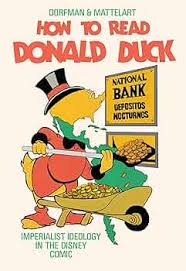
There are countless books critiquing Christian mission’s historic complicity in the impositions of colonial empire; and other more recent writings bringing that critique into the present day, redefining empire as neoliberalism’s global reach. Ryan Kuja follows this pattern, using the terms McMission and ’empire lite’ in discussing North American Christianity’s embrace of the prevailing culture and the sometimes subtle ways this works its way into missionary and aid projects.
But Ryan Kuja goes beyond the usual parameters of these familiar arguments in seeking a way to reimagine mission, to create a world where the distance between missionary and those on the receiving end of mission, is diminished. Daring to suggest that the missionary themselves may be the one in most need of healing, of receiving good news, Kuja meditates in the area of the missionary’s motivation for doing mission: raising uncomfortable questions for the sake of liberating wholeness.
This makes his book challenging, but important reading for anyone following a call in Christian mission. Quoting Kathleen O’Connor, Kuja writes,
The poverty of the Majority World is palpable. It largely resides out in the open where all can see it. But this poverty, and the people who dwell in its midst, does not pretend that it isn’t there. This pain cannot be abjured. Unlike the suffering of the West, no one denies it. In North America, our sense of despair “masquerades under a guise of well-being so persuasive as to deceive the wearers of the masks themselves.”
What secures the reader’s attention and provokes an empathic response is that Kuja shares deeply his own sufferings and denials, and how they played a central part in both shaping his missionary activities and ultimately causing them to burn out in mental breakdown. Kuja is generous in sharing his story for the space it opens up for the reader to interrogate our own stories. Better still, and a constant throughout this engaging book, he celebrates how a God who is always making things new, finds a way for re-creation in all our stories.
“I glimpse a promise that despite the presence of brokenness, disease, and death, all things are being reconciled, restored, and reborn.” Mission unites us with others with whom we are called to learn this together.
Here’s the Guardian columnist as wild man of the woods and adventurer of the seas. Monbiot walks his talk – about rewilding ourselves, and our world – and it’s quite a ride. Equal to the all the vivid descriptions of his outdoors adventures (and of course, connecting with them in an engagingly-crafted way) are his polemical passages, in which, more than anything else, sheep are targeted as being at the core of the problem he wants to solve.
Notable quote:
“The drive towards monoculture causes a dewilding, of both places and people. It strips the Earth of the diversity of life and natural structure to which human beings are drawn. It creates a dull world, a flat world, a world lacking in colour and variety, which enhances ecological boredom, narrows the scope of our lives, limits the range of our engagement with nature, pushes us towards a monoculture of the spirit.
I doubt that anyone wants this to happen to the land that surrounds them, except those – a small number – who make their money this way. But these few have been empowered both by their ownership of the land and by a kind of cultural cringe, which prevents other people from challenging them. The Italian philosopher Antonio Gramsci used the term ‘cultural hegemony’ to describe the way in which ideas and concepts which benefit a dominant class are universalized. They become norms, adopted whole and unexamined, which shape our thinking. Perhaps we suffer from agricultural hegemony: what is deemed to be good for farmers or landowners is deemed, without question or challenge, to be good for everyone.
In some cases we pay to support this hegemony and the monocultures it creates. Scores of billions of pounds of public money are spent each year to sustain the degradation of the natural world. In the United States, farm subsidies encourage the unvaried planting, across vast acreages, of corn. In Canada, subsidies for pulp and paper mills help to replace ancient forests with uniform plantations. Worse, perhaps, from the point of view of rewilding, is public spending which sustains monocultures in places which would otherwise be reclaimed by nature. This is what happens in the nation I am using as a case study of the monomania which blights many parts of the world. Here another monoculture has developed: a luxuriance, an infestation, a plague . . . of sheep.
I have an unhealthy obsession with sheep. It occupies many of my waking hours and haunts my dreams. I hate them. Perhaps I should clarify that statement. I hate not the animals themselves, which cannot be blamed for what they do, but their impact on both our ecology and our social history. Sheep are the primary reason – closely followed by grouse shooting and deer stalking – for the sad state of the British uplands. Partly as a result of their assaults, Wales now possesses less than one-third of the average forest cover of Europe. Their husbandry is the greatest obstacle to the rewilding I would like to see.
To identify the sheep as an agent of destruction is little short of blasphemy. In England and Wales the animal appears to possess full diplomatic immunity. Its role in the dispossession of many of the people who once worked on the land, as the commons were enclosed by landlords hoping to profit from the wool trade, is largely forgotten. This is what Thomas More wrote in Utopia, published in 1516:
Your sheep, that were wont to be so meek and tame and so small eaters, now, as I hear say, be become so great devourers, and so wild, that they eat up and swallow down the very men themselves. They consume, destroy, and devour whole fields, houses, and cities. For look in what parts of the realm doth grow the finest and therefore dearest wool, there noblemen and gentlemen, yea and certain abbots, holy men no doubt … leave no ground for tillage, they inclose all into pastures; they throw down houses; they pluck down towns, and leave nothing standing, but only the church to be made a sheep-house … the husbandmen be thrust out of their own, or else either by cunning and fraud, or by violent oppression they be put besides it, or by wrongs and injuries they be so wearied, that they be compelled to sell all: by one means therefore or by other, either by hook or crook they must needs depart away!
In Scotland, where the Clearances were more sudden and even more brutal than the enclosures in England and Wales, some people remain aware of the dispossession and impoverishment caused by sheep farming. But in Wales, though sheep have replaced people since the Cistercians established the Strata Florida abbey in the twelfth century, and though these enclosures were bravely resisted by riots and revolts such as Rhyfel y Sais Bach (the War of the Little Englishmen) in what is now Ceredigion in 1820 the white plague has become a symbol of nationhood, an emblem almost as sacred as Agnus Dei, the Lamb of God, ‘which taketh away the sin of the world’.” (pp. 154-155)
Typically for this master-of-making-connections, this is no dry scientific survey or political treatise on the subject of climate change. This is an investigation of what lies behind, beneath, the present situation – as the publisher’s blurb well-describes it, this is ‘a breath-taking journey through myth, philosophy and literature [wherein] McIntosh reveals the psychohistory of modernity [showing] how our inner lives have fallen prey to a numbing culture of violence and the motivational manipulation of marketing.’ This is a journey towards discovering ‘the spiritual meaning of … our troubled times; only then can a sense of magic and all that gives life start to mend a broken world.’
Notable quote: ‘I was giving a lecture about violence in New York State in 2003. … It was just after the start of the second Gulf War and I was acutely aware how uncomfortable many in the audience felt at that time about being American. They felt trapped as members of an oppressor’s camp that they couldn’t own their membership of. It’s the same for most of us in many walks of life today. We, too, are children of the consumerist world that drives climate change. And yet, if we can’t get to terms with and own our complicity, it will blind us from being able to see and tackle the issues. At the end of my talk a man in the audience came forward. He told me the following story that kind of put things into a wider perspective. ‘You know,’ he said, ‘I used to be a hippie back in the days when hippies were real hippies who set out to change the world. And a couple of my good hippie friends travelled to Cuba because they wanted to shake hands with Che Guevara. ‘Well, they managed to get an audience with the great Che, and of course, being real hippies, they started off by apologising for being Americans.’ ‘And do you know what?’ he continued. ‘The great Che, living out there on Cuba … so far away from where it all happens. . . he just smiled back. And he told them: Don t you apologise for being Americans. You’re the lucky ones. You see, you get to live in the belly of the beast.”’ (p.158-159)
McIntosh defines spiritual activism as ‘the applied spiritual underpinning for social and environmental change in the world’. He met Matt Carmichael at a gathering of activists in Leeds in 2009 and these two – a generation apart in age – have collaborated together in teaching spiritual activism together. ‘What makes “spiritual” activism so exciting is that it approaches demanding issues in ways that invite an ever-deepening perception of reality and of our positioning – individually and collectively – within it’. A great resource, notable for a short case study at the end of each chapter, featuring a biography from activists across time, place and spiritual tradition.
Notable quote: ‘In Medina Muhammad (pbuh) guaranteed freedom of religion for Pagans, Jews, Christians and Muslims. He raised the status of women, freed slaves and encouraged public debate. He appointed Bilal, and African slave freed after brutal treatment in Mecca, as the first mu’ezzin and founded the first mosque as a place for community renewal and reconciliation, open to all… No pacifist … (however) in his context he raised the ethical bar where conflict was concerned by setting … rules … including a requirement to accept any terms the enemy offered to bring a halt to violence, however disadvantageous.’
Alastair McIntosh’s ten-day odyssey across Harris and Lewis, a rip-roaring adventure in homecoming, a meditation on life in all its deep and joined-up wonder. With gripping debates on spirituality from Rumi to Calvin and beyond, encounters with ancient gaelic faerie culture and meditations on the lost great play of J.M.Barrie, plus accounts of the pacifist’s raw, honest, ongoing dialogue with active military figures. I was left with a sense of the strength and the struggle of the Hebridean community through Alastair’s engagement with the folks that he meets along the way. And a far keener understanding of what is meant by human ecology – the interconnectedness of all things – which is Alastair‘s lifetime’s work and inspiration. So many memorable sections; I’ll long flinch at the image of him ripping off his fingernails whilst struggling to tear away the sphagnum moss which had sealed the ancient well of Tobar a’ Ghobha.
Notable quotes: ‘And God knows – I can’t help but feel an admiration, indeed, affection for these (military) men. Their sense of community. Their ethic of looking out for one another. The research that shows that most don’t want to kill, they want to protect, and that’s a form of love.’ … ‘There’s something happens when a man comes face to face with Hell. It burns away the bullshit. It betrays the plastic world that passes for normality in all its crass vacuity.’ … ‘We all take up positions on a long front. None of us can quite see how it looks from the next person’s post. That’s how I reconcile my differences with the military. Rarely does a human being get to glimpse full compass of the battlefield of life.’ (p.249-250)
Great reading for a fortnight on the Isle of Mull (where I was locum minister for the island’s one Episcopal church, St Columba, Gruline, in May 2017). It’s comprehensive in its sweep across time and place; it’s full of wondrous stories, myths and legends (each helping develop a picture of a culture deep in spirituality). It taught me a lot – especially through the author’s insights into Argyll’s distinctive style of Presbyterianism, which Bradley insists (and often demonstrates), in contrast to the harsh Calvinistic culture of other parts of Scotland, is ‘liberal and mystical’.
Notable quote:‘Tasha Gefreh, an art historian at Edimburgh University, has suggested that (the) images on St Martin’s Cross (Iona) were deliberately designed to be viewed sequentially through the day as the sun struck different features. Noting that the first part to be highlighted in the morning is the bottom of the east face and the last in the late afternoon the top of the west face, she has proposed that the Cross tells the story of salvation beginning with the serpent’s curse and ending with the birth of Christ.’ (p.91)
Another book which is, quite simply, all about Jesus and what it means to live with his life and teachings at the centre. That is: really, radically, live. Essentially it means getting alongside the poor. Full of Shane’s great stories about this continuing adventure, this is an inspirational book and a great challenge.
Notable quote: ‘It’s like Gandhi said last century, whenever people asked him if he was a Christian. “Ask the poor. They will tell you who the Christians are.” … Or Mother Teresa: “It is fashionable to talk about the poor. Unfortunately it is not fashionable to talk with them.”’ (p.151) … ‘It is a beautiful thing when folks in poverty are no longer just a mission project but become genuine friends and family with whom we laugh, cry, dream and struggle.’ (p.109)































 Alastair McIntosh,


