
Book Reviews
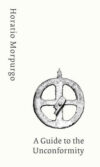
Horatio Morpurgo, A Guide to the Unconformity
Phil Smith, Mind the Gaps, Mind the Fields
All published in the Fault Lines essay series by Triarchy Press, 2026
When a schoolboy discovered a 16th Century astrolabe in Lyme Bay in 1967, no-one paid any attention. The retrieval of this rare maritime navigational instrument provoked no interest locally and barely any in academia. In A Guide to the Unconformity, #1 in Triarchy Press’ Fault Lines essay series, Horatio Morpurgo asks why.
On one level, A Guide to the Unconformity is a local history deep-dive, in which Morpurgo investigates his subject from every discoverable angle. On another level, this is a manifesto for a deeper kind of engagement with the local, an encouragement to wait long enough for a place ‘to answer the questions it raises for you’. It’s a beautifully crafted little book full of engaging details, which draws the reader ever deeper into The Undercliff, whilst speculating on The Unconformity.
The Undercliff is a wooded area of coast between Seaton and Lyme Regis, prone to landslips and difficult to traverse, where John Fowles wrote The French Lieutenant’s Woman, whilst The Unconformity is a geological feature of the area, a fault-line sandwiched between datable rock strata which represents ‘80 million missing years’, a ‘colossal break in the sequence’.
Morpurgo proposes that the term unconformity be ‘upcycled for wider use, with the clays and earthiness of its original context still sticking to it’. In a world which causes us increasingly to think and act algorithmically, Morpurgo wants us to embrace the unconformity, which ‘may take the form of something very close to home, some emblem or story which matters very little to anyone else’, which can’t be explained very well, but is ‘the place we all have to go sometimes, even though it isn’t very brightly lit, away from the praise or blame of others.’
The Unconformity is a gap – in rock structure and in time – and gaps are the concern of Phil Smith. In Mind the Gaps, (Fault Lines essay #2), Phil describes our world as one whose grand narratives are increasingly failing, and proposes that we attend instead to the gaps in ‘the disturbed edges of culture, ecology and everyday life’ to imagine a different way of thinking and being. This essay, and its partner Mind the Fields, invite their readers to ‘attend to absences, to find places of change in bubbling vacuums and to experiment with living differently in the leaks and loopholes of existence’.
Smith’s ‘unconformity’ is The Empty Temple: a place whose emptiness is an opportunity: to say “I am nothing”, whilst sitting in the emptiness, and the quietness, and waiting, or leaving it empty ‘to see what happens close by’.
I’m privileged to have the care of four country churches, which are left always open and which enjoy daily visitors of every kind (in a week or two the swallows will be rebuilding their annual ecclesial nests). By far the most fruitful, energising encounters of each day are those unexpected, unpredictable, ones with those visitors; and there’s a thrill of uncertainty in the gap which exists between the initial greeting between us, and what will follow… which can be anything between “Do you have a toilet?” to an hour investigating different forms of moss on ancient headstones. These are my moments of (quoting Smith’s concluding words) ‘finding wisdom in the random; intuiting what chance is speaking … in coincidences across fields of space’.
Mind The Gaps / Fields gave me much food for thought.
As regards gaps, being increasingly dissatisfied with grand narratives (and feeling frustratedly duty-bound ‘in role’ to have to show assent to their inconsistencies, e.g., to have to recite The Creed week by week), I’m more than ready to apply myself to seeking out gaps to see what they reveal. If anything – or if nothing. Problem for me is, a functional instinct: an attachment to the need to always have to ‘find something’ in everything. In my case Nietzsche wasn’t wrong when he wrote, “On Priests”, that “into every gap they put their delusion, their stopgap, which they called God”. My cairn terrier Poppy noses into every gap in every dry-stone wall seemingly convinced she’ll find a rabbit therein. It’s only very occasionally that she does, but whatever the outcome she seems at peace with the gap-nosing process: that’s the kind of peace I’m after learning to seek. A peace disinterested in achieving ‘understanding’, a satisfaction with purely ‘being’.
In Mind the Fields I especially liked Phil’s passages on folklore, having thoroughly previously enjoyed Crab & Bee’s Matter of Britain, Smith’s collaboration with Helen Billinghurst, ‘An inspired re-telling of some of the finest tales and tropes of England, at once very old and very modern’ (Ronald Hutton).
Smith discusses ‘the partial, intuited knowing’ possible in ancient stone circles and burial sites and the ‘enigmatic’ yet ‘recognisable’ and ‘accessible’ qualities of folklore as increasingly explored today in a turn – from what he helpfully terms the 1960s ‘transactional reaction within commerce’ – which like him I also hope will be more significant and lasting through being more self-critical than the counter-culture which precedes it.
Whereas Horatio Morpurgo’s essay demonstrates the effect of remaining rooted to a spot for long enough (a long time) for it to begin to reveal itself to you, I find Phil Smith’s two essays are characteristically playful: like so much of his writing, these evoke a sense of invitation into forms of play – with words, concepts, intuitions, play which is both enjoyable and invigorating inasmuch as it opens up new ways of experiencing.
I’m grateful to Triarchy Press for launching the Fault Lines essay series, to ‘explore the cracks in the stories modern civilisation tells itself – about progress, control, care, truth, and what counts as ‘real’.’ Each of these short books succeed in the publisher’s aim to ‘open a seam where systems grind against lived experience, where official narratives no longer fit what people feel in their bones.’
About Horatio Morpurgo / Phil Smith
