
The Creator is the Saviour (précis)

Colossians 1:15-20

The Fourteenth Sunday after Trinity, 6 September 2026, Eldroth, Clapham

“I lift up their eyes to the hills, from where is my help to come?” asks the Psalmist. 

Many people look for salvation in nature, but don’t know where it will come from. Every day people visit here seeking something special, something restoring and  healing, maybe something spiritual, in these hills. But what?

People have always been on this search for God in creation. The ancient people often thought of a Creator God as a sky god – bringing forth rain in season; they regarded him as a nature god – punishing wrongdoing through famine or flood; the ancients saw him as just like a god of any other emperor cult – destroying enemies to claim territory for his chosen people. There are echoes of all this n our own scriptures.

But with wonderful insight, our scriptures perceive a personal God – Psalm 121 speaks of one who like a loving parent watches over us whilst we sleep; One who like a caring companion on an uphill trail makes sure that our feet do not stumble; One who even shades us from scorching sun and the dangers of a shadowy moon. Ever-present, ever-giving, this Creator God has something more. 

And then, Jesus comes along. And Paul teaches us in Colossians that the Creator of this very earth, these very hills, is also and at the same time the Saviour.

Could he be the One God who not only sets Creation in motion and sustains it, but who also intervenes in human history to save it? If he is a personal God then is it possible for us to see him?

The city of Colossae around 60 years after the birth of Jesus had been twice shaken by cataclysmic  earthquakes which destroyed the place. It had become a place of spiritual turmoil whose people were seeking certainty and Salvation. One of the earliest Christian communities was established there. 

To try to help these Colossian believers, Paul wrote one of the very first Christian creeds. We heard it this morning. It begins by saying, ’Christ is the visible image of the invisible God’. This is a remarkable statement: if you look at Jesus you see what God is like. This Creator God who had been hidden for so long is visible in the very human shape and form of Jesus. Jesus is God in the flesh.

Jesus is the saviour, through his absolutely self-giving act on the cross and his glorious life-giving resurrection. And he is also entirely the Creator – ‘who existed before anything was created and is supreme over all Creation, through whom God created everything in the heavenly realms and on earth.’ The Creator is the Saviour, says the earliest Christian creed. 

There is no division between Creation and Salvation. This means that as well as seeking heavenly, ‘spiritual’ things we also find God acting at the heart of the life we live now, the human and the non-human parts of Creation. This good news inspires those who are seeking Salvation in this world – those who care about life on earth becoming better, now; and it is inspirational for those who are seeking Salvation for this world – those who care about the earth and its well-being.

This passage of scripture helps us understand that Jesus brings Creation and Salvation together. His life-affirming act of creating everything from nothing, is exactly the same thing as his self-giving out of love on the cross through which death itself dies. The Creator is the Saviour of the human and the non-human world, which is one world, entirely made and saved in the absolute love of God.

The Salvation which Jesus worked was, at the same time, the fulfilment of his Creation. On the cross human sinfulness died, as did everything else that is broken in nature. On the cross Salvation was bought, marking a new beginning for God’s whole Creation. [2]

We can celebrate because by the life of Jesus, God’s fullest life; and by the cross, God’s gift of self-giving unconditional love; and by Jesus’ resurrection, God’s release of healing, forgiving, renewing power into the world: all that is broken in Creation may begin again – human and non-human alike.

We can give thanks that as a result of the life, death, and resurrection of Jesus, Creation is in the process of leaving death behind. As a result of the life, death, and resurrection of Jesus, all Creation is in the process of being reconciled.

Is this the good news for those who are seeking Salvation in nature but didn’t know where to look?

  • the good news that there is a Creator behind all this beauty and wonder, who existed before anything else, and who holds all Creation together;
  • the good news that this same Creator can be known because he has shown himself, he has walked the earth, lived, laughed, loved, taught, blessed, healed.

Yes – the good news is that this Creator-Saviour has wept over the world’s brokenness, has calmed nature’s storms, has restored afflicted people to good health, has cast out evil spirits and brought blessing to the poor.

Yes – the good news is that this same Creator-Saviour, by exposing and confronting the sin of the world, paid the price with his life but now lives again, having overcame death once for all.

All this is very good news for all who are seeking after God’s life and truth in this world.

The final piece of good news is that the creative work of Salvation – of reconciling Creation – is a work in which we believers share in every day.

The Colossian creed says that ‘Christ is also the head of the church, which is his body.’ Which means that just as Jesus himself once embodied God on earth, showing the world the image of the previously invisible God, so now, with the help of his Holy Spirit, The Church now embodies God on earth. It is our joyful task to share in his work of Salvation – of reconciling Creation – in the way we live our lives each and every day. 

Let us pray constantly for all who ‘lift up their eyes to the hills’, all those who are looking for God in this world. And let us continue to encourage each other in the joyful task of opening our eyes to The Creator, who is also and in the very same way The Saviour. 

Notes

[1] A précis of a longer sermon, The Creator is the Saviour, preached at Ayashi Chuo Christ Church, Miyagi, Japan, 31 July 2022

[2] This section is based on James Alison, Raising Abel: The Recovery of the Eschatological Imagination, pp.49-50. Read extract of the passage here. See also Paul Nuechterlein, Girardian Lectionary, PROPER 11 (July 17-23) – YEAR C / Ordinary Time 16, Resources on Colossians 1:15-28, and my previous sermons Reconciling Creation (Somerset, 2015) and Rebirth and reconciliation: Creation starts with Christ (Yorkshire, 2021)
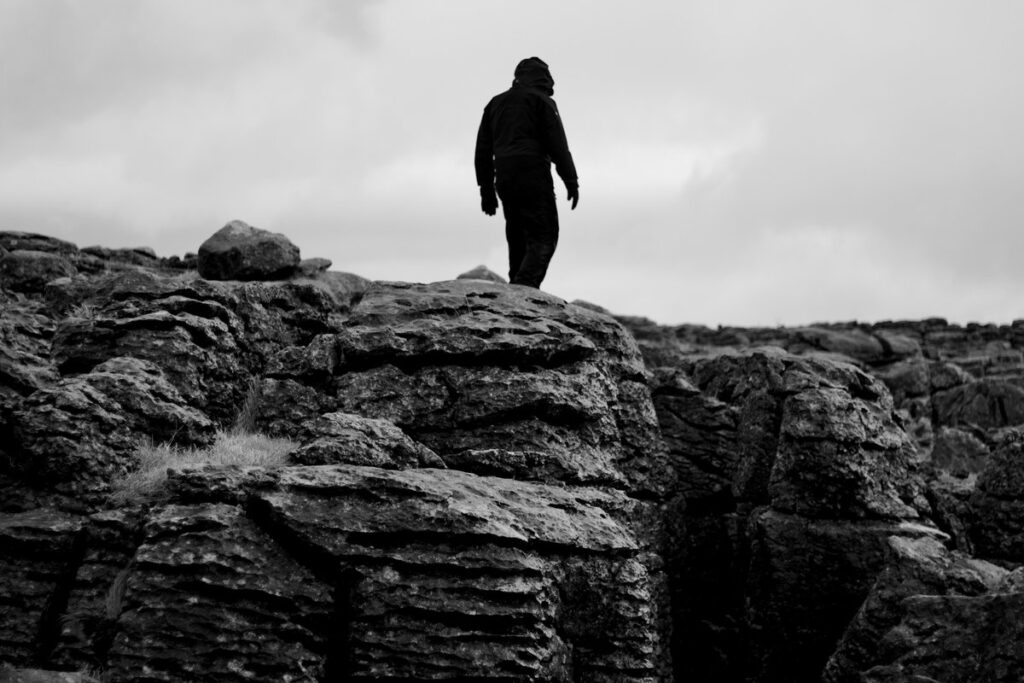
For times like this: what the life-lost-in-God looks like

Romans 12.9–21, Matthew 16.21–28

The Thirteenth Sunday after Trinity, 30 August 2026 

Keasden (Benefice service)

Jesus said, “Those who lose their life for my sake will find it.” Now, it may not sound too appealing to you, the idea of losing your life – for his sake or anyone else’s. This is the sort of bible passage often deployed by the puritanical strand of Christianity, which assumes that anything we enjoy must be bad for us, teaching that any such self-indulgence must be remedied by a large dose of self-denial. [1]

Now, I’ll defend puritanism insofar as it is important to be careful to live in harmony with God, with others and ourselves. But I wonder if, when Jesus spoke about losing our life for his sake, rather than preaching ‘against pleasure’, he was using the word ‘losing’ in a more positive way. There are positive ways of talking about ‘losing’ and ‘loss’. For instance, have you ever found yourself completely lost in a book? Have you ever been lost in wonder at a building’s incredible architecture? Have you ever gazed at a mountain, lost in thought, or been in a concert audience swaying on their feet, completely lost in the music?

To be be lost in something, the Cambridge English Dictionary tells us, is to be “giving so much attention to what you are doing that you are not conscious of anything else that is happening around you.” [2] These examples of being lost – in a book, in wonder, in thought, and in music – suggest that generally, being lost in something is a positive, fulfilling experience.

When Jesus says, “Those who lose their life for my sake will find it,” does he mean  that giving all our attention to him is the way we will find fulfilment in life? 

I think this is how St Paul picked it up in his letter to the believers in Rome, when he said, at the start of Romans Chapter 12, which we heard last week, “I appeal to you, brothers and sisters, by the mercies of God, to present your bodies as a living sacrifice, holy and acceptable to God, which is your spiritual worship.” Paul is saying that giving ourselves to God completely is the way we will find fulfilment in life. 

‘Losing ourselves’ in God is a desire of the heart. Giving all of ourselves to him needs  a decision of the head. Paul encourages the believers, “Do not be conformed to this world, but be transformed by the renewing of your minds, so that you may discern what is the will of God – what is good and acceptable and perfect.” 

If our heart’s desire is to be lost in God, then we must make some conscious decisions about how we go about that. This is the concern of the second part of Romans Chapter 12, today’s reading. Here, Paul details how a life-lost-in-God is minded to “Let love be genuine; to hate what is evil, to hold fast to what is good.” These matters of the heart show themselves in the way we live towards others. 

“Love one another with mutual affection,” Paul tells those who want to lose their lives in God. We are to enter into a form of competition with each other completely devoid of rivalry: “Outdo one another in showing honour,” he writes. Imagine what that might look like!

When our desire is to serve the Lord wholeheartedly then we learn how to “Rejoice in hope, to be patient in suffering, to persevere in prayer.” One whose life is lost in God will “Contribute to the needs of the saints and extend hospitality to strangers.”

The person lost-in-God gives so much attention to doing this that they  lose consciousness of other ways of behaving. So, rather than being drawn into rivalry with those who persecute us, we bless and do not curse them. We set aside our self-concern to show empathy with others, rejoicing with those who rejoice, weeping with those who weep. We lose ourselves in a spirit of harmony, associating with the lowly and living peaceably with all. 

A life lost in God is a life without vengeance and wrath, refusing to be overcome by evil, determining to overcome evil with good. I’d like you to please note that the phrase “the wrath of God” is a mistranslation. The bible scholars have added something in English which does not exist in the original Greek. There is no wrath in God: “do not be conformed to this world” by thinking that there is, or wanting there to be, for the wrath is in the human heart. “Leave no room for wrath” is what Paul actually wrote.[3]

When you think about it, we are forever being transformed by the renewing of our minds. Consider how differently you think about things now to when you were a child; consider those things which have made you change your mind through the years. The way we think and act is forever being transformed by technology as it impacts on us, and by other changes to our material lives. Today society is waking up to the realisation that our children’s children’s wellbeing, even survival, depends on how we turn our minds to the obvious challenges of adapting to Earth’s rapidly-warming climate. As Dolly Parton once said, “We cannot direct the wind, but we can adjust the sails.” [4]

For times like this, Paul writes, “Be transformed by the renewing of your minds, so that you may discern what is the will of God – what is good and acceptable and perfect.” To “lose our life for the sake of Christ” is a decision we make in our heart and with our head, which leads to a transformation by which we will find our life.

Notes

[1] Wikipedia: Puritans.

[2] Cambridge Dictionary: be lost in something.

[3] Paul Nuechterlein, “Romans 12:9-21: Exegetical Notes #4” in Girardian Lectionary, Reflections: Year A: Proper 17a, quoting Robert Hamerton-Kelly, Sacred Violence: Paul’s Hermeneutic of the Cross, pp. 150-156, on “Love, Law, and Vengeance” (excerpt).

[4] Widely quoted, see quoteinvestigator.com; Dolly Parton died on 25 August 2026.

John’s Notes: Craven Faults

Clapham & District Newsletter, August-September 2026

Lately I’ve been listening to Craven Faults. By Craven Faults I don’t mean the major fractures in the earth’s crust across the Pennines. I mean Craven Faults, an enigmatic musician about whom, besides his music, little is known. “I’ve got friends who I’ve never told about this music,” he once told a journalist who he’d granted a rare interview to. Despite – or possibly because of – this elusiveness, Craven Faults’ music is well-received. He has released a series of EPs and three double-length LPs since 2017, in a form of instrumental music described by his record company (The Horsforth-based Leaf Label) as summoning ‘half-remembered journeys across post-industrial Yorkshire’. 2026’s Sidings LP – ‘loosely based on the journeys of freight traffic on the Settle-Carlisle line linking gypsum and limestone quarries to the national rail network over 150 years’ – peaked at number 15 in the UK album LP sales chart, and 4 in the downloads chart in February 2026.

The titles of his music tracks will resonate with residents of Craven and rural West Yorkshire. Some reference specific sites: Netherfield Works, Springhead Works, Lowfold Works; some natural landscape features as in the 2020 album Erratics & Unconformities; others man-made features such as Enclosures and Bounds. The epic May Birching (76 minutes long and accessible on YouTube and Bandcamp) ‘is named for the Northern tradition of secretly fixing greenery to people’s houses between sunset and dawn on May Day to indicate their character (e.g., sprigs of briar, holly and plum stood for liar, folly and glum)’.

Even if you’re not sure whether lengthy pieces of brooding electronic music are your thing, but you are interested in the human geographies and natural histories of ‘place’ – and this place, ‘our’ place, in particular – then I’d say that Craven Faults is worth investigating.

It’s not just the music, with Craven Faults. Each record sleeve is impeccably designed, featuring monochrome landscape scenes on their covers, images of abandoned mines, drystone walls, former mills and tumbledown barns. ‘I am looking for shapes in the landscape,’ he says. Removing the colour ‘helps. It removes the obvious beauty of a spectacular view and leaves something slightly different. I try to avoid making them dramatic. I’m trying to make the subjects look as natural as possible.’

In an essay on Craven Faults in Northern Earth (Issue 184, Summer 2006) Phil Hubbard expands on this: ‘There are no scenes of tourists thronging chocolate-box perfect villages here, nor any Grand Designs conversions suggestive of the type of rural gentrification that has beset rural Yorkshire since the Covid-19 lockdown encouraged working from home. This is a search for the layers beneath, repressed histories of place and identity which are there just below the surface if one looks – and listens.’

Craven Faults’ musical meditations derive from his keen observed eye for detail in these upland Northern landscapes, its old broken gate posts, its clapper bridges over becks, its abandoned cow houses. One inspiration is Arthur Raistrick, whose 1972 book Industrial Archaeology started Craven Faults ‘off on this journey’ when he purchased it from a junk shop. As Hubbard reports, ‘Raistrick was a Yorkshire polymath best known as a pioneer in English Landscape Studies, producing over 300 books, pamphlets and articles, mainly on the landscapes of the North Of England. But unlike W.G. Hoskins, who argued little of any beauty was created after the 18th century, Raistrick argued the beauty of the Yorkshire Dales – dry stone walls, vernacular buildings and packhorse ways – was entirely the product of the industrial era.’

Thought to have been a member of a successful group who toured America and Europe in the late 1980s, the journey which led him to become Craven Faults began with a leisurely ramble around the tiny village of Hebden, halfway between Grassington and Appletreewick. ‘I could see a chimney in the distance,’ he recalls. ‘The remains of Yarnbury lead mine. All the spoil heaps are grassed over now, but the ground is still rough. There used to be 5,000 people living in that valley, but now they’ve all gone. It was a town, and now it’s not. And I found that really interesting – the way urban places can become rural places.’

To appreciate the layers and details of landscape as sculpted by human activity over many centuries requires the same sort of deep listening which Craven Faults’ lengthy meditative music invites. For him, the key seems to be about making art which helps the artist and their audience to take a long view of time. He told Phil Hubbard, ”Idols and Altars’ (a track on his Standers LP) makes me think of pre-Christian religion or something like that. It’s to do with carved rocks and things on Ilkley Moor. And the track itself is quite slow and it’s got a melody which is spacious, like you hear music in church. I don’t go to church. Never have. But sometimes when you hear like a church organ, there’s something about the physical space of the sound. That is, there’s a slowness to it.’

Craven Faults: cravenfaults.com; YouTube Channel; Bandcamp artists page.

Northern Earth: northernearth.co.uk

See also Bob Fischer, Craven Faults: Faulty Towers in Electronic Sound, July 13, 2023

A Celebration of God’s World in Summer: 1

Introduction: Creation groaning

The Seventh Sunday after Trinity, 19 July 2026

Austwick, Clapham, Eldroth

“We know that the whole creation has been groaning in labour pains until now,” writes St Paul. 

Creation groaning – when we hear that phrase, we might think of our poor world, its plants and its creatures and their struggles to survive the excesses of human behaviour which – we must now surely humbly accept – are proving increasingly damaging to the rest of the natural world.

Creation groaning – under the heat of our increasingly warming planet. Creation groaning: as the seas rise and as species are lost to pollution, over-hunting and over-fishing we can almost hear the sound of nature crying in its despair and decline.

I won’t go on, we know the situation and it saddens us. 

But St Paul didn’t stop at creation groaning. He said that “the whole creation has been groaning in labour pains until now.”

Now, this, his full statement, takes us somewhere quite different altogether. It takes us from lamenting what is being lost in creation, into a place of hope.  For the groaning of labour pains is a groaning which leads to new life. The groaning of labour pains anticipate new birth, new worlds being born. Paul is giving we, his readers, hope that despite the extreme painfulness the beloved earth is currently experiencing, a new world will come. 

“The creation itself will be set free from its bondage to decay and will obtain the freedom of the glory of the children of God,” Paul writes. This new beginning for creation is shared with humankind, suffering, broken, humankind. As he puts it:  “and not only the creation, but we ourselves, who have the first fruits of the Spirit, groan inwardly while we wait for adoption, the redemption of our bodies.”

The much-loved naturalist David Attenborough has said about humans that “We moved from being a part of nature to being apart from nature.” 

“The truth is,” he said, “the natural world is changing. And we are totally dependent on that world. It provides our food, water and air. It is the most precious thing we have and we need to defend it.”

Saving the planet, taught Attenborough, means saving ourselves. “Laid upon us, whether we like it or not, is an awesome responsibility,” he said. In our hands now lies not only our own future, but that of all other living creatures with whom we share the earth.” [1]

Maybe the best place to start to take that responsibility to heart is to affirm and celebrate our love for God’s world in all its beautiful complexity. And if we want to celebrate our love for God’s world then a very good place for us to start is in song. 

There are many beautiful songs which celebrate creation, from traditional hymns like All Creatures of Our God and King – a joyous prayer of St. Francis of Assisi rewritten in Victorian times – to How Great Thou Art, popularised during Billy Graham’s crusades of the last half of the twentieth century.

But perhaps the most popular, most enduring, also the simplest, purest, celebration of God’s world, is All Things Bright and Beautiful, an Anglican hymn, also sung in many other Christian denominations, written by Cecil Frances Alexander and first published in her Hymns for Little Children of 1848. [2]

‘Fanny’ Alexander, as she was known, may have been inspired by Psalm 104, verses 24 and 25: “Oh Lord, how manifold are thy works! in wisdom hast thou made them all: the earth is full of thy riches. So is this great and wide sea, wherein are things creeping innumerable, both small and great beasts”. 

She may also have been inspired as well by a verse from Samuel Taylor Coleridge’s The Rime of the Ancient Mariner, which goes: “He prayeth best, who loveth best; All things great and small; For the dear God who loveth us; He made and loveth all.”

Or maybe inspiration may have come from William Paley’s Natural Theology, published in 1802, that argues for God as the designer of the natural world. The hymn speaks of “tiny wings” and “eyes to see them”, and Paley cited wings and eyes as examples of a complex design, like a watch, with God as the Divine Watchmaker.

Fanny Alexander was the daughter of a a land-agent on an Irish estate, and began writing poems and songs as a child. By the time she married the Anglican clergyman William Alexander, afterwards Bishop of Derry and Archbishop of Armagh, in 1850, she was a successfully published, and well-travelled, writer. [3]

Inspiration for Alexander’s hymn text “The purple-headed mountain, The river running by” has been attributed to four separate locations in Wales, Ireland and England. Alexander visited Llanwenarth House in Govilon, Monmouthshire in 1848, and it is claimed that the hymn refers to the nearby Sugar Loaf Mountain or the Blorenge mountains, and to the River Usk. Other places where Alexander is known to have visited have also been suggested as inspirations: the gardens of Markree Castle near Sligo, the village of Dunster in Somerset, and the landscape of Grabbist Hill and the River Avill.

It may have been that “the purple headed mountain” is in Benevenagh, County Londonderry, a place she often visited, and “the river running by” is the River Roe which flows there. We will never know for sure, but what we do know is that whenever we sing this song – first learned at school – the words invoke in us pictures of the places and things in nature which mean the most to us. 

For the next few Sundays this summer I’m going to invite you to reflect with me on different lines from All Things Bright and Beautiful, so that we can celebrate God’s world together. Next week I’ll talk about “Each little flower that opens”; in subsequent weeks we’ll think about “Each little bird that sings”, “The ripe fruits in the garden”, “The tall trees in the greenwood”, and finally “The sunset and the morning”. I hope you’ll find these little reflections helpfully refreshing reminders of all the beauty the surrounds us, and inspiration to keep on caring for it all as best we can. [4]

God saw all that he had made: And it was very good.

On the sixth day God completed all his work,

Heaven and earth with all their mighty throng,

And God blessed the seventh day and made it holy

Because on the seventh day he rested from all his work.

Notes

[1] David Attenborough quotes from goodreads.com.

[2] Wikipedia:  All Things Bright and Beautiful.

[3] Wikipedia: Cecil Frances Alexander.

[4] These talks are based on ‘A Celebration of God’s World in Summer’ in The Staffordshire Seven, Seasonal Worship from the Countryside,  pp.105-114.

Let my heart be good soil today

Romans 8.1-11, Matthew 13.1-9,18-23

The Sixth Sunday after Trinity, 12 July 2026, Austwick, Keasden

How would you describe what a parable is? I’d say that Jesus’ parables were “earthly stories with a heavenly twist”.  He drew his stories from real life, but often gave them a twist in the tale, to awaken his audience to some fresh perspective from God which he wants us to discover.

So let’s look at this morning’s Parable of the Sower. It seems straightforward, but there are at least two twists in this tale that would have struck Jesus’ audience. The first is that this sower apparently does nothing to prepare his field before sowing the seed. He doesn’t clear any rocks out; he pulls no weeds; he doesn’t turn the soil over. No, this free-spirited sower simply goes out into a field with a lot of rocks and weeds and trampled down, hard ground, and flings the seed anywhere and everywhere.

The second aspect of this story that would have given Jesus’ audience a jolt is the ending: the good soil that produces thirty, sixty, and a hundred-fold. This is an unheard-of harvest!Today, with our heavy, mechanised agriculture we would expect that sort of outcome. But in Jesus’ day, thirty, sixty, and a hundred-fold would be an outrageous expectation for a harvest. 

So what is going on? What heavenly perspective is Jesus presenting to us here? Let’s compare the Parable of the Sower with another well-known story, The Parable of the Prodigal Son, which also has a heavenly twist.

What’s really surprising in the story of the Prodigal Son is not so much that a young son would make mistakes, prodigally wasting his father’s money. No, that’s quite common, isn’t it? What’s surprising is how easily the father welcomes him home afterwards. From the standpoint of the elder son, who had remained faithful to his father, his father was the prodigal one, wasting such love on a good-for-nothing son. 

Now, that invites us to see today’s parable as being the story of a Prodigal Sower, a farmer who seemingly wastes most of his seed on soil that isn’t going to produce much, if anything. This sower throws out lots and lots of seed, and he doesn’t seem to care where he throws it.

But Jesus isn¹t trying to teach us about farming, but about God’s kingdom, and that¹s why there’s this heavenly twist in the tale. The Prodigal Sower is meant to surprise us into seeing that God’s kingdom is wonderfully different than what we might expect it to be. It first helps us unlearn something about God’s kingdom before we learn something new and wonderful. 

We might believe that the most precious commodity in God’s kingdom is God’s loving forgiveness. And if we do, then Jesus is teaching us that there is an unlimited supply of it, enough for everyone. God can afford to ‘sow’ it absolutely everywhere, because there is never any danger of God running out of it. 

So we need to unlearn the idea that there might be a limited supply of God’s love and mercy, that there will come a day when God’s mercy will run out, and God’s wrath will do all the evil-doers in. We need to unlearn this stuff about God’s wrath, which sounds less like a loving Father God and rather more like us and our limited amounts of mercy. We need to learn that the supply of God’s mercy does not give out, he just keeps on sowing and sowing that seed until it will one day yield a fantastic harvest. 

There is something else very important to unlearn – that is, our habit of always trying to decide who’s in and who’s out. This parable seems to divide up people into groups of who’s in and who’s out. There are three kinds of soil, representing three kinds of people, who resist and reject God’s word as bearing fruit in them. They all reject the word. We are tempted to assume we know who the bad ones are, and to assume that we are the good soil – but is that the message, really? 

Let’s look again at the climax of the Gospel story: Jesus hanging by himself on the cross, utterly and totally rejected. The cross is the ultimate in heavenly twists. Not even his disciples have joined him in this terrible fate, those closest to him who might have thought they were the good soil in his parable. They have all run away afraid at the first sign of persecution – in other words, even they have turned out to be like rocky soil, those who fall away when persecution arises. 

Jesus is God’s Word made flesh given to this world. And when all was said and done, no one had eyes or ears or minds to understand. That Word was completely rejected. But on Easter morning it bore fruit anyway. God raised that seed of Jesus’ death to bear the fruit of new life precisely in the teeth of such total rejection. 

God has to be so prodigal with that word of loving forgiveness, that seed God planted in this world through Jesus Christ, because all of our hearts are so stubborn to truly receive it. If God wasn’t so prodigal in sowing the seed, it never would have stood a chance, because this whole world had become tramped down and rocky and overgrown with weeds. There was no good soil left. 

If you or I were given a field that was completely grown over and rocky, what would we do? Abandon it perhaps. Or get a big, powerful plough of some sort and at least try to plough it all under, in order to find some good soil. But notice that is not what God did in Jesus Christ. God did not plough us all under and start over. That happened in the story of Noah and the flood, with its rainbow which tells us that God tried that way once and promised never to do it again. 

No, instead God kept on sowing the seed of his loving forgiveness anyway, and it bore fruit not just in spite of the rejection of the bad soil but through it. It was precisely by Jesus himself becoming the Rejected One on the cross that God somehow bore the fruit of new life. This is where the parable leads us, and the mystery of God’s grace comes forth. God sowed his mercy in the cross and the incredible harvest was the resurrection. 

There is one further twist to this parable. If I am to unlearn the usual human story filled with divisions and strife, then I need to unlearn looking at myself as good soil and others as bad soil. 

No, I must remember that I am the whole field and have all those sorts of soil in me. In my life there is sometimes hard soil and rocky soil and weeds which rejects or fails God, and sometimes there is good soil that bears the fruit of sharing God’s limitless love with others. 

God never stops sowing his grace into my life. I must constantly pray, then, that by his grace, my heart and life may be good soil today, good soil which will bear good fruit. 

Thank God for being such a generous sower; Lord, let my heart be good soil today. 

 John Davies

Note

This sermon is substantially based on a sermon of Paul Nuechterlein, The Prodigal Sower, Girardian Lectionary, Reflections,  Year A, Proper 10A Sermon (2002); and this version is a rewrite of Matthew 13 – The Prodigal Sower preached in Somerset in 2014 and Norris Green in 2005.

Unburdening: life in the divine presence (2026)

Genesis 24.34-38,42-49, 58-67, Matthew 11.16-19, 25-30 

The Fifth Sunday after Trinity, 5 July 2023, Eldroth, Clapham 

‘Come to me, all you who are weary and carrying heavy burdens, and I will give you rest.’ 

Such gracious words tell us that ours is not a God who makes hard demands on people – contrary to what we may have been told. Ours is a God who wants to free us from our burdens. 

Neither is our God one who controls us by keeping us busy – though the Church can tend to do that. Our God wants to give us rest. 

Nor is ours a God who imposes on us – no, our God is gentle and humble in heart. His yoke is easy. His burden is light. 

So if we are carrying heavy burdens, we must understand that those burdens are coming from somewhere else. God invites us to turn ourselves away from those places, and come to him to find rest. 

The burdens we carry, they’re often to do with our relationships with others. It doesn’t take very long in the Bible before the perfect couple sail into troubled waters and Adam is blaming Eve for taking the apple – ‘she told me to do it’, he tells God, and god is unimpressed. 

Then there’s Psalm 45, a song for a royal wedding, where the Psalmist sings to the princess, ‘Forget your own people and your father’s house. The king … is your master; therefore do him honour.’ [2] Imagine what pressure that put on this bride: the burden of her being pulled in two opposing  directions at once: one way towards her beloved family, and the other way towards her beloved husband. Maybe you’ve sometimes felt torn like that.

We are always listening to what others say about us: how we respond to them is what shapes and forms us into the people we are. And when others’ expectations of us tear us in different directions or are impossible to fulfil, that’s a heavy load to carry. And, if we’re honest, then we must admit that sometimes we are the ones who burden others with our expectations of them. 

I don’t think people have changed that much since New Testament times. Jesus said that his generation were never satisfied. They berated the ascetic John the Baptist for neither eating nor drinking, but when they saw how Jesus enjoyed eating and drinking, they called him a glutton and a drunkard. 

Each of us feel the pressure imposed on us by outside forces: whether that’s what our friends and neighbours are doing and saying, or how the Sunday supplements or social media are telling us how we should live. It can be depressing, feeling that you don’t measure up.

Maybe the greatest burdens we carry are those we impose on ourselves. Whether it’s the young worrying about their image, their body shape, their looks, or the old worrying about their legacy, dealing with unfinished business, regrets. 

Jesus invites us to turn our backs on these pressures, to cease comparing what others have achieved or what they want us to do and be, and to gently attend to our own, unique, life story. 

Jesus invites us to trust God, to carry our anxieties to him in prayer. Our knees may buckle under the weight of these prayers; he promises that as we bend the knee before him he will take the load away. 

Some things which burden us are outside our control and may not be easily fixed: so the pressures they impose are intense. Prayer can help us to cope with the pressure and to change these circumstances; in prayer God can reveal to us a way to deal with the challenges which life throws at us. 

And praying with others can inspire and guide us to work together to change our material circumstances, and those of others who are in need or distress. [3] 

Let us take a few moments now, to unburden ourselves before God….

Jesus says, ‘Come to me, all you who are weary and carrying heavy burdens, 

and I will give you rest.’

Come to me. Take a step back to forget for a few moments what others think of you; and to remember what God thinks of you. 

‘Take my yoke upon you, and learn from me; for I am gentle and humble in heart, and you will find rest for your souls.’

Know yourself to be loved by him, so that love will fill your heart so much that that it flows out in blessing into all your other relationships too. 

We thank you, Lord, that your yoke is easy, and your burden is light. We thank you that you always long to lift us up when we are down. Help us to always come to you with our burdens, to always trust in your care. Amen

Notes 

[1] A rewrite of Unburdening: life in the divine presence, preached at Austwick and Keasden, 2023, and Come to me all you weary and burdened, preached in Devon, 2011.

[2] Psalm 45. 

[3] See e.g., Deirdre Brower Latz with Carmel Murphy Elliott and Sarah Purcell, Church on the Margins. Church Action on Poverty, Referenced February 2023. 

Slaves of righteousness sing freedom songs

Romans 6.12–23, Matthew 10.40–42

The Fourth Sunday after Trinity, 28 June 2026, Austwick, Clapham

When the slaves were released, they came out singing.

In 1873 a group of freed slaves from North America came to the UK to sing. Newspaper adverts announced that The Jubilee Singers from Fisk University in Nashville, Tennessee would be giving a rendering of their “Marvellous and heart-stirring melodies” in concert halls, cathedrals and churches across Britain, including an appearance before Queen Victoria herself. [1]

They sang Spirituals, songs that convey both the hardships of slavery and the freedom the singers find in Christ. Having been emancipated in 1865 these Singers were on a mission to raise funds for Fisk, America’s first black university, proclaiming the right of all African Americans to education.

Touring the world the Fisk Singers introduced audiences to their “songs of sorrow” like Swing Low Sweet Chariot, Steal Away to Jesus, and Nobody Knows the Trouble I See, which went on to become anthems of freedom and equality across the world. It was reported that Queen Victoria and the Prime Minister Gladstone ‘treated the Singers like equals’ – a very telling turn of phrase.

For Victoria they performed “Go Down, Moses”, a song drawing on the ancient Hebrew scriptures which reminded the singers and their audience that just as slavery has a long history, so does liberation, as enacted by Moses, who was tasked by God to set the enslaved people free:

When Israel was in Egypt’s land – let my people go

Oppress’d so hard they could not stand – let my people go

Go down, Moses, way down in Egypt’s land

Tell old Pharaoh, let my people go [2]

Musician Harvey Brough, who recently brought the story of The Jubilee Singers to the London stage, said of those who sang the Spirituals, “They had the most shocking terrible inhumane treatment for all their lives as slaves, but there is not a word of anger or revenge in the songs. It’s about: ‘We are going to get to a better place and it will be different’.” [3]

This echoes the words of African American theologian James Cone that “Through all of the sorrow of the Sorrow Songs there breathes a hope — a faith in the ultimate justice of things.” Even when being treated most fearfully, through their songs the enslaved were able to say, “I’m no longer a slave to fear. I am a child of God”. [4]

A century after The Jubilee Singers visited England, another musician rose to prominence. Bob Marley, the son of Norman Marley, an English colonial army captain, and a Jamaican woman, Cedella Booker, a descendant of the Coromantee slaves who had staged the strongest uprising for freedom in Jamaica’s plantation era. In ‘Redemption Song’, Bob Marley sang: “Emancipate yourselves from mental slavery; None but ourselves can free our minds.” [5]

Mental slavery, Marley suggests, is the real slavery, the fundamental slavery from which one must free oneself. This emancipation is something towards which the enslaved peoples of the Americas were constantly reaching, as they sang their sorrowful, spiritual, songs. 

And this leads us into another discussion of slavery – that of St Paul in his epistle to the Romans. He wrote about the slavery of sin, which seems to have a lot in common with the mental slavery Bob Marley sang about. “Do not let sin exercise dominion in your mortal bodies, to make you obey their passions,” Paul wrote. 

What were the passions of the colonisers who developed and drove the transatlantic slave trade? The passion to explore the world and discover lands new to them, to derive as much wealth as possible for themselves from these places by fully exploiting the natural and human resources, as they saw them, which they found there.

And what was the sin which exercised dominion in their colonial hearts and minds? The sin of white supremacy, the belief that white people are superior to those of other races. One slave owner, future American president Thomas Jefferson, wrote in 1785 that blacks were “inferior to the whites in the endowments of body and mind.” Lawmakers created codes which socially segregated white colonists from black enslaved people, creating divisions which would hinder their ability to unite. [6] The enslavers who were themselves enslaved – to the sin of segregation – formed the modern world, its inequalities of social structures and of spirit their legacy which we carry with us.

Paul asks his readers, “Do you not know that if you present yourselves to anyone as obedient slaves, you are slaves of the one whom you obey, either of sin, which leads to death, or of obedience, which leads to righteousness?” 

Those who seek to live a spiritual life understand the need to search ourselves, to ask the question – to whom are we enslaved? Living a spiritual life often requires a change of heart, a conversion. [7]

And Paul is writing to those who, in seeking to live a spiritual life have experienced a change of heart, a conversion. “But thanks be to God,” he says, “that you, having once been slaves of sin, have become obedient from the heart to the form of teaching to which you were entrusted, and that you, having been set free from sin, have become slaves of righteousness.”

Slaves of righteousness – this is a different form of enslavement altogether. It is a willing giving-over of oneself to the God of righteousness. Those of the colonial mind who experience a change of heart, a conversion, give over our passion for wealth and status for a passion for goodness and justice; we gave over our belief in our superiority over those of other races to discover the joys of travelling in unity with all people; we give over the angers and fears which fuel division, for love and peace.

There is still in our society a widespread reluctance to truly grapple with colonialism and its legacy, and so the colonial mindset lies deep within each one of us, and in our communities and institutions, and it is not dormant. ‘Othering’, the way we separate ourselves from peoples unlike us, is ever-present, driving anxiety and fear, weakening and destabilising society. 

But redemption songs are for everyone, they are for the sons and daughters of former slaves and of former slave owners willing to gather at the table of fellowship. [8] They help us all to say together joyfully, that ‘We are going to get to a better place and it will be different.’

When the slaves were released, they came out singing. Paul, in his theological Greek, and Bob Marley in his Jamaican patois,together ask us to humbly acknowledge that we all carry something of the Pharaoh within us: whilst also celebrating that, by the grace of God, we can also all be Moses. The question they pose to us provokes a change of heart, a conversion: “Won’t you help to sing these songs of freedom… [these] redemption songs?”

Notes

[1] Emma Bartholomew, Fisk Jubilee Singers: Amazing story of how freed slaves sang in Hackney 150 years ago. Ham&High, 21 February 2019.

[2] Wikipedia: Go Down, Moses. 

[3] Emma Bartholomew, Fisk Jubilee Singers: Amazing story of how freed slaves sang in Hackney 150 years ago. Ham&High, 21 February 2019.

[4] Bethel Music, Jonathan David Helser, Melissa Helser, No Longer Slaves.

[5] Bob Marley, Redemption Song; Horace Campbell, Bob Marley and Emancipation From Mental Slavery. United Reggae, 25 May 2011.

[6] Wikipedia: White supremacy. 

[7] “Living a spiritual life requires a change of heart, a conversion. Such a conversion may be marked by a sudden inner change, or it can take place through a long, quiet process of transformation. But it always involves an inner experience of oneness.” Henri J. M. Nouwen, The Spiritual Life: Eight Essential Titles by Henri Nouwen.

[8] “I have a dream that one day on the red hills of Georgia, the sons of former slaves and the sons of former slave owners will be able to sit down together at the table of brotherhood.” Martin Luther King Jr, I Have a Dream: Writings and Speeches That Changed the World.

Dead to sin and alive to God

Romans 6.1b–11, Matthew 10.24–39

 The Third Sunday after Trinity, 21 June 2026 

Austwick, Clapham, Eldroth

In early 1933, the poet Dylan Thomas’ friend Bert Trick suggested that he and Thomas both write a poem on the subject of ‘immortality’. Trick’s poem contained the refrain “For death is not the end,” and Thomas wrote a poem which was destined to become a modern classic: “And death shall have no dominion”. In 1936 Thomas included it in his second published volume of poetry, Twenty-five Poems, which revealed Thomas’s personal beliefs regarding religion and the forces of nature.

And death shall have no dominion.

Dead men naked they shall be one

With the man in the wind and the west moon;

When their bones are picked clean and the clean bones gone,

They shall have stars at elbow and foot;

Though they go mad they shall be sane,

Though they sink through the sea they shall rise again;

Though lovers be lost love shall not;

And death shall have no dominion.

The poem’s title references chapter 6 of Paul’s epistle to the Romans, which we’ve heard today: “We know that Christ, being raised from the dead, will never die again; death no longer has dominion over him.” Death – Thomas seems to be saying, under the influence of St Paul – Death, in Christ, is a guarantee of immortality. 

You’ll recall another famous Dylan Thomas poem about death, “Do Not Go Gentle Into That Good Night,” which is notable for its defiant anger and its passion, both of which are familiar emotions to anyone in the throes of bereavement. “And death shall have no dominion” is less angry, but it does strongly express Thomas’s faith that the dying and the bereaved would not be defeated by their experience, but healed and liberated. 

Though they go mad they shall be sane,

Though they sink through the sea they shall rise again…

It seems to mark for Thomas a turning from his early agnosticism towards an appreciation of the Christian view of death – that what follows for the deceased and for the bereaved is good, and lasting.

Though lovers be lost love shall not…

It is our faith that death shall have no dominion. It is our faith that the power of death is too weak to overcome us. The effect of death is not enough to defeat us, for  the greater and brighter power of love is at work in the world and in the heavens. Death shall not dominate us. Love will remain.

It’s a message for us in frightening times. We need not “fear those who kill the body,” says Jesus, for they “cannot kill the soul”.

The gospels and Paul’s writings remind us that in the ultimate act of self-giving love, God himself has been through death – in Jesus. This assures us of the strength of God’s promise that everyone else who goes through death with him will also experience what he did: a rebirth, a resurrection.

Paul wrote, “We have been buried with him by baptism into death, so that, just as Christ was raised from the dead by the glory of the Father, so we too might walk in newness of life.” This reassures us that all who have been baptised, together with all who have had a Christian funeral, receive God’s gift of immortality.

“So we too might walk in newness of life” teaches us that resurrection is not only for the deceased in heaven: it is also for us here on earth. Although we suffer little deaths, every day, endings, frights and failures, God is always alongside us working to bring about new beginnings, new life. 

We know this when we watch what God is doing in nature. In the depths of winter when all is dead and seems forever lost, we have learned to trust that before long the spring will come, that the hibernating creatures will crawl out of their little tombs and begin to move and mix and mate again; that the trees will start to blossom and the birds begin to sing because the earth is once again budding with food for them and all the other creatures around. 

This all teaches us that it is God’s natural way to ensure that there is a gentle, generous, power in life which will always be overcoming death. And so we, being part of God’s good creation, find our winter blues fall away as the dark nights fade and the light days return. Through this we learn to trust that when we’re at our lowest, God’s green shoots of rebirth and growth are already at work in our hearts and lives. 

“And death shall have no dominion” echoes the revelation of Jesus Christ himself in the gospels, in celebrating immortality as belonging to the everyday world. It is a thing as much as air, water, or mud. If we are “alive to God”, then even here and now in our imperfect fleshly bodies, eternal life is ours.

Notes

A rewrite of Romans 6 / John 6: And death shall have no dominion, preached in Croxteth, 2008.

Sources, accessed 17 June 2026:

Wikipedia: And death shall have no dominion.

Casey Morris, Exploring Dylan Thomas: A Maverick Poet’s Legacy. Decadent Serpant, 22 January 2025.

“We find ourselves when we lose ourselves in the service of others”

Romans 5.1-8, Matthew 9.35-10.8

The Second Sunday after Trinity, 14 June 2026, Austwick, Keasden 

Today I’d like to give you my World Cup sermon. But if that makes your heart sink, having already had your fill of football which is all over the media right now, let me try to keep your interest a little longer by saying that I’ll be talking about a World Cup with a difference, a World Cup competition which is already over, having just held its final game, in Mexico City, on the 16th of May. 

I’m talking about the Street Child World Cup, a football tournament of 30 teams of young people from around the world, children and teenagers who have a significant connection to the streets, whether living on the streets, or working on the streets, or both. These are children who might sleep in public spaces like parks, bus stations, or abandoned buildings, or spend most of their day on the streets trying to earn their family essential money, or to avoid abuse at home, or for other reasons: young people facing various risks, including exploitation, violence, abuse, and health issues, who often lack access to education, healthcare, and other basic services. 

The Street Child World Cup is organised by Street Child United, which since 2010 has been dedicated to championing the rights and the dignity of street-connected children and young people around the world. Football is what brings them together, in the same place and time as every FIFA World Cup. But there are bigger goals than winning a competition: the idea is to ensure that young people with experience of life on the streets are not only seen, but heard and taken seriously. Beyond the pitch, Street Child United works hard to ensure that street-connected children are not treated as invisible or criminalised, but recognised as people with agency and a voice.

So while the football competition goes on, there is also a Congress, where young leaders from every team come together to debate, draft and deliver a collective call-to-action on the rights of street-connected children, and there is an arts programme co-created with the players, who turn their lived experience into murals, film, photography and performances that travel beyond the tournament, helping to raise the general public’s awareness of street children and their lives.

“It is the World Cup of hope and the World Cup of peace and the World Cup of joy. It really is a positive World Cup,” says John Wroe, who is the CEO of Street Child United. 

Now, I know John. We used to work together helping to organise a Christian music and arts festival called Greenbelt. Occasionally we’d take time out with some others to kick a ball around the festival camping fields, he proudly wearing his Swansea City shirt, me my Everton one, both of us supporting teams which made us familiar with repeated failure and disappointment, occasional moments of joy, and with a deep sense of community, belonging, love. Later John, who worked then in community arts development, helped me and a friend put together a proposal to turn an old Methodist church in North Liverpool into an arts centre; which in the end didn’t work out but which is still, to this day, a popular church volunteer-run cafe.

It was on a trip to South Africa that John got the vision for the Street Child World Cup. He recalls travelling in a small group with his wife and children “to show our kids that the opportunities they had in life were unusual,” he said. What he encountered instead changed everything. The project the family visited was run entirely by former street-connected young people. It was on a makeshift football pitch that one boy, 14, who had lived on the streets since the age of four, told John: “When people see me on the streets, they say I’m a street child. But when they see me playing football, they say I am a person… a person like you.” Those comments showed the transformative power of sport not just to engage, but to reframe how society sees and treats street children. Thus an idea began to take shape that would grow into Street Child United. “If we can change the way people see street children, we can begin to change the way they are treated,” John says.

To cut a long and beautiful story short, the first Street Child World Cup was held in Durban, South Africa, in March 2010, just prior to the FIFA World Cup being hosted there. Featuring teams of street children and former street children from Brazil, South Africa, Nicaragua, Ukraine, India, the Philippines and Tanzania, each squad of nine players, aged between 14 and 16 years old, included three girls. The teams are organised by frontline organisations working with homeless and socially excluded children. A representative team of young people from Manchester also took part in the tournament, and Blue Peter brought it to the attention of our nation. Since then, there have been Street Child World Cups in Brazil, Russia and Qatar, and this year’s, just completed, in Mexico. 

The impact can be seismic: after one tournament, the Tanzanian team returned home to national TV coverage, a reception in parliament and a meeting with the president. “We had no idea the impact in-country that this football tournament would be having,” said John. 

Countless young people have shaped Street Child United, including Sadock John from Tanzania, whom John Wroe met at the first World Cup in 2010. Sadock, once living on the streets, received his first birth certificate and passport through Street Child United.  The bureaucratic hurdles that come with crossing borders are very challenging for those who have grown up without formal documentation. Today, Sadock is studying at The University of West England and will graduate this  year. Stories like Sadock’s, and countless others, are at the heart of why Street Child United exists.

John says, “We find ourselves when we lose ourselves in the service of others.” Which, for me, connects with the charge which Jesus gave his disciples: “Go to the lost sheep of the house of Israel. Proclaim the good news, “The kingdom of heaven has come near.” Cure the sick, raise the dead, cleanse the lepers, cast out demons. You received without payment; give without payment.”

If we take this to be Jesus’ charge to all his followers, including ourselves, then this can sound daunting. But not so much, I think, when we break it down.

“Go to the lost sheep of the house of Israel” means go home – start from where you are, go to the people you know and can relate to; those you have something in common with. If your thing is football, go to those others who also love playing it.

“Proclaim the good news, “The kingdom of heaven has come near”” means telling those people that whatever their circumstances, God loves them, is close to them, wants the best for them.

“Cure the sick, raise the dead, cleanse the lepers, cast out demons” means be a healer. Maybe you don’t see your kindness, your generosity with your time or your support of charity, as being healing miracles, but they are: small miracles, perhaps, but actions which make a real difference to those people you show care towards, and can even transform their lives.

“We find ourselves when we lose ourselves in the service of others,” says John Wroe. We find ourselves when we help people by doing something which we know about, something which we’re good at, something which we’re passionate about. 

Notes

Source material for this talk, accessed 10 June 2026:

Street Child United website.

Wikipedia: Street Child World Cup.

Jo Griffin, The heartbreaking, life-affirming story of the Street Kids’ World Cup. Big Issue, 21 May 2018.

Dahaba Ali Hussen, How the Street Child World Cup changes the game for homeless children: ‘It’s the World Cup of hope’. Big Issue, 4 May 2026.

Mercy, not sacrifice, for the tax farmer

Romans 4.13–25, Matthew 9.9-13,18-26

The First Sunday after Trinity, 7 June 2026, Eldroth, Clapham

Today the mood music in my head comes from the Beatles, because yesterday – now there’s a Paul McCartney song for starters – yesterday was my birthday, and so the question for me now and for the next twelve months is: ‘Will you still need me, will you still feed me…. now I’m sixty-four?’ And today’s gospel reading suggests a George Harrison song, released almost exactly sixty years ago today: “If you drive a car, I’ll tax the street, If you try to sit, I’ll tax your seat, If you get too cold, I’ll tax the heat, If you take a walk, I’ll tax your feet. Cause I’m the Taxman. Yeah, I’m the taxman”

Keeping up the Liverpudlian theme, you may remember that back in 1989 Ken Dodd was tried for tax evasion. During the case, held in Liverpool, Dodd’s representative George Carman QC, quipped, “Some accountants are comedians, but comedians are never accountants”. The trial revealed that Doddy had very little money in his bank account, but did have £336,000 in cash stashed in suitcases in his attic. When asked by the judge, “What does a hundred thousand pounds in a suitcase feel like?”, Doddy replied, “The notes are very light, M’Lord.” [1]

While this court case rumbled on I was working in an office block which overlooked Liverpool’s Queen Elizabeth II Law Courts. I worked for the Department of Trade and Industry but the two floors above us housed the Inland Revenue – and the officers who had put together the case against Ken Dodd.

Every day of the trial Doddy left the court building with a large crowd of well-wishers cheering him through the square, while above them, lines of tax officers hung out of open windows booing and jeering him. On the day that Dodd was acquitted of all charges the boos from the tax officers were louder and bitter; but the enormous crowd on the square was jubilant. Beneath the Queen Victoria monument an impromptu street party broke out around the vindicated comedian. As I watched this astonishing scene through our office windows I thought, it shows just how much ordinary people love seeing someone turn the tables on the taxman.

Interestingly, in the gospels, over and over again, we find Jesus turning the tables on the taxman. He famously did it in the Temple, angrily sending the money-changers packing. He did it to the Pharisees by twisting their trick question about paying taxes to the emperor into an irresistible challenge to them to put God before politics or money; he did it in his observation about the widow who out of her poverty, donated all she had, in contrast to the wealthy whose gifts were meagre by comparison. The Widow’s Mite shows how the Temple tax most hurt the people on the lowest incomes, the people who Jesus most openly loved.

Jesus turned the tables on the scribes, those pious types who liked to be noticed in the market-places, and loved having the best seats in the synagogues and places of honour at banquets, who made a show of their lavish Temple sacrifices. Jesus saw how they gained their wealth and status through playing the Temple tax system to their benefit, a game which – they knew full well – kept the poorest people in poverty. 

Jesus condemned those who acted devoutly, but whose wealth was derived from the sacrifices they  forced the poorest people to make. [2] No wonder they began looking for ways to silence him.

His opposition to the Temple tax system got him crucified in the end. Those who profited from these tax laws set out to destroy the One who in his very body represented the laws of God – the laws of love for God and for neighbour. But they didn’t have the last word. “Destroy this Temple, and in three days I will raise it up”, Jesus said to them, speaking of the Temple of his body. [3] 

The resurrection of Jesus was his ultimate table-turning act against these taxmen. For the sacrifice he made of himself on the cross condemned to death the old sacrificial system in all its corruption; it brought to life the ways of the God of mercy available to all those who embrace his law of love.

The story of the call of Matthew, a tax-collector, reveals that others caught up in the Temple tax system got damaged too. Tax-collectors were reviled in Jewish society because their daily work involved them in the practice of tax-farming, that is, they paid the Roman State the taxes for a certain area of the country, and then attempted to cover their outlay by collecting money or saleable goods from the people within that area. [4] 

Tax collectors made their money by demanding tax payments in excess of what Rome levied and keeping the difference. It was a murky business, just like the buying and reselling of debt is a murky business today. Whilst some tax-collectors would relish the potential lucrative rewards, they all had to sacrifice some sense of self-worth, and live with being detested by their peers because of their perceived greed and collaboration with the Roman occupiers. It’s likely that for many, tax-collecting was a last resort: they’d accepted the shame of it for the sake of their family’s financial survival. 

Matthew collected taxes in the village of Capernaum in the province of Galilee. Like all the other tax-collectors he would have been despised, treated with contempt by his neighbours. So imagine how Matthew’s heart must have melted when Jesus turned and said to him, “follow me”.

This was Jesus turning the tables on the tax-collector Matthew – but in a good way. While everyone else mistrusted Matthew, Jesus showed him trust. While everyone else shamed Matthew, Jesus lifted from Matthew the veil of shame which shrouded him and enabled him to hold his head up again, to know himself affirmed and loved. In being merciful towards Matthew Jesus also turned the tables on the culture which sacrificed tax-collectors on the altar of shame for the sake of the Temple.

In the eyes of the self-righteous, tax-collectors and sinners were all contaminated people. People unworthy to enter the Temple to make their sacrifices. This is why the Pharisees criticised Jesus  for eating with them. But Jesus turned the tables on the Pharisees by suggesting that it was their attitude that was toxic, saying, ‘Those who are well have no need of a physician, but those who are sick. Go and learn what this means: “I desire mercy, not sacrifice.” For I came to call not the upright, but sinners.’ [5]

We can relate to people who can admit their faults and failings. Like Doddy, who in the years  following his court case would come onstage and introduce himself as a “failed accountant” [6]

When it comes to turning the tables on the taxman, God knows that we’re all just people trying to get along financially, caught up in the system, making sacrifices sometimes in trying to do the right thing by the state, by our family,  and by our charitable donations.

What Matthew joyfully discovered is that above every other consideration in life, we are unconditionally loved by Jesus, and called to join him in the joyful work of practicing mercy towards ourselves and others, putting God’s law of love above every other concern. 

Notes

This s a rewrite of my talk Turning the tables on the taxman, preached in Devon, 2012 and Somerset, 2018.

[1] Wikipedia: Ken Dodd: Tax evasion court case.

[2] Mark 12.40.

[3] John 2.17-22.

[4] Wikipedia: Tax collector: Christian Bible; Tax farming.

[5] Matthew 9.10-13.

[6] Wikipedia: Ken Dodd: Tax evasion court case.